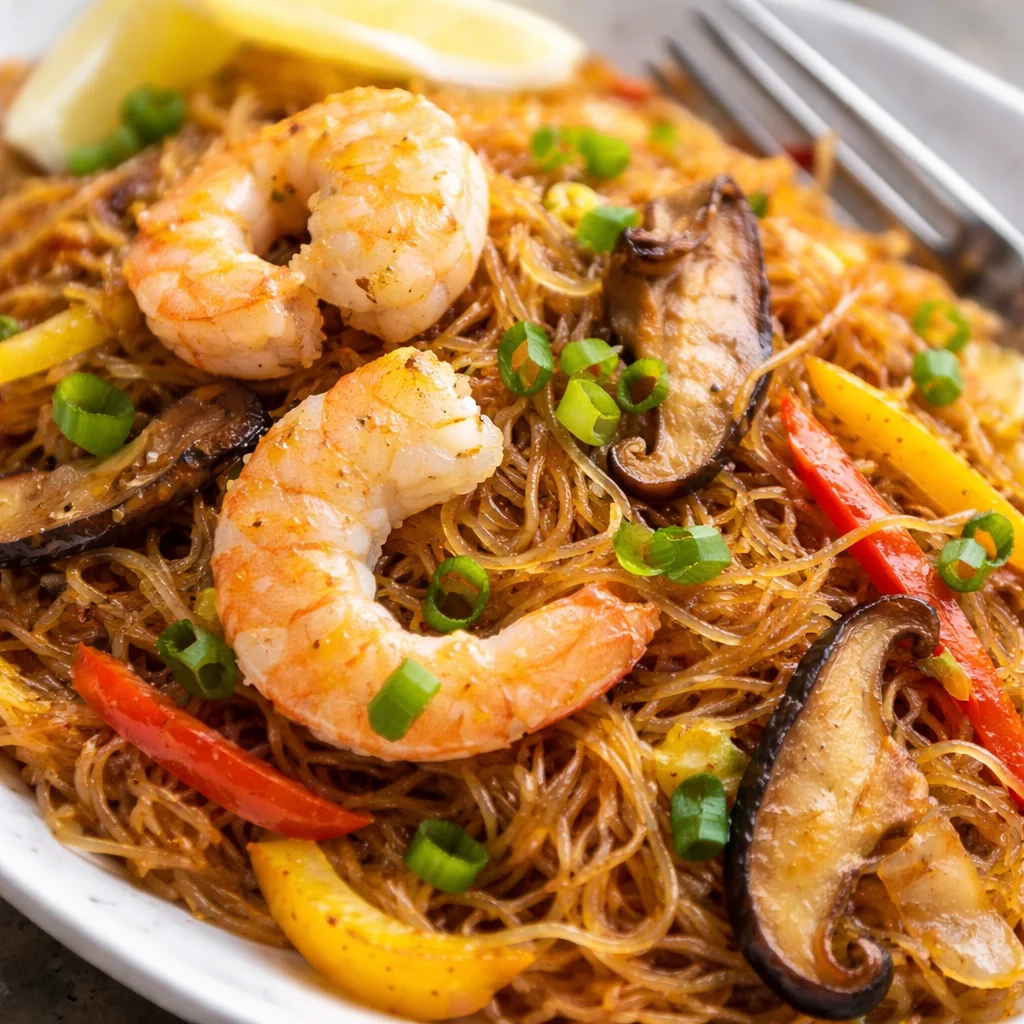
easy chicken sotanghon stir fry Easy Chicken Sotanghon Stir Fry Recipe is my answer for those nights when you open the fridge, see a pack of chicken, and just want dinner to be fast but still feel special. I make this when I am tired of takeout, or when someone texts, “I am on my way,” and I need something cozy and filling in a hurry. Sotanghon noodles cook quickly, and they soak up sauce like they were born for it. The best part is how it smells while it cooks, garlicky, savory, and a little sweet. If you have been craving a simple noodle dish that tastes like home, you are in the right place.
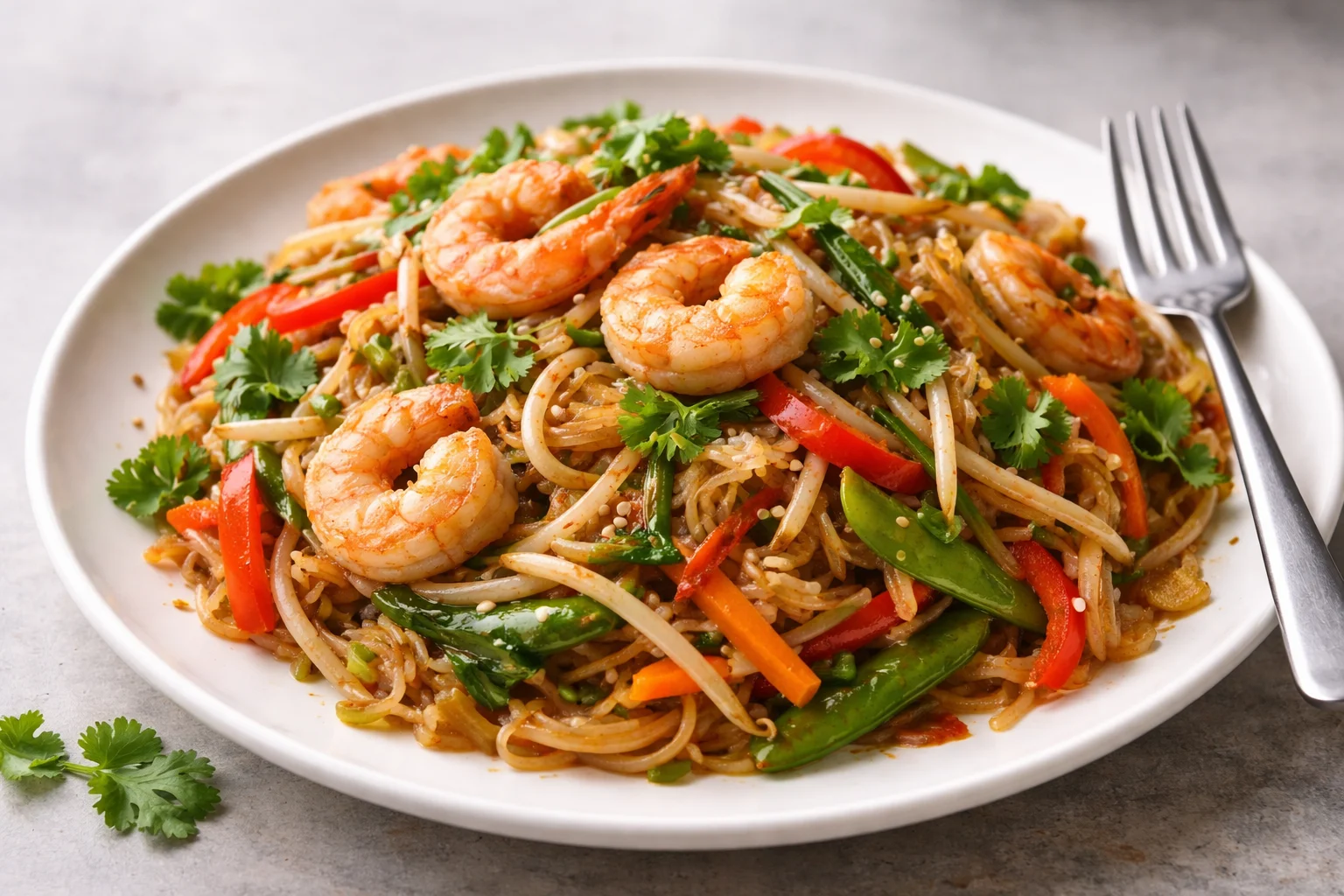
Cooking Tips for Perfect Sotanghon Dishes
I have made sotanghon so many times that I have learned a few things the hard way. The noodles can go from perfect to mushy if you treat them like regular pasta. The good news is that once you know the little tricks, easy chicken sotanghon stir fry becomes one of those recipes you can do on autopilot.
My go to steps that prevent sticky, clumpy noodles
Here is what works for me every time:
- Soak, do not boil, the noodles first. I soak sotanghon in room temp water until flexible, usually 8 to 12 minutes. Then I drain well.
- Use a wide pan. A wider surface means the noodles can spread out and coat evenly with sauce.
- Cook the chicken first. Get color on it so it tastes like something, not just boiled protein.
- Add noodles near the end. Sotanghon finishes cooking in the sauce, so it should not sit in liquid too long.
- Keep extra broth nearby. If the noodles look dry before they turn tender, add a splash of broth or water, a little at a time.
One more tip that sounds small but matters a lot: cut your chicken thin. Thin pieces cook fast and stay juicy. If you want another quick chicken dinner idea for busy weeknights, I also like this clickable recipe: quick Filipino chicken stir fry. It is the same kind of low stress cooking energy.
Ingredient Notes for Sotanghon Recipes
Let us talk ingredients without making it complicated. The magic of easy chicken sotanghon stir fry is that it tastes like you worked harder than you did. It is mostly pantry staples plus a few fresh things that give it life.
What you will need and easy swaps
These are the ingredients I reach for, with simple notes so you can adjust based on what you have:
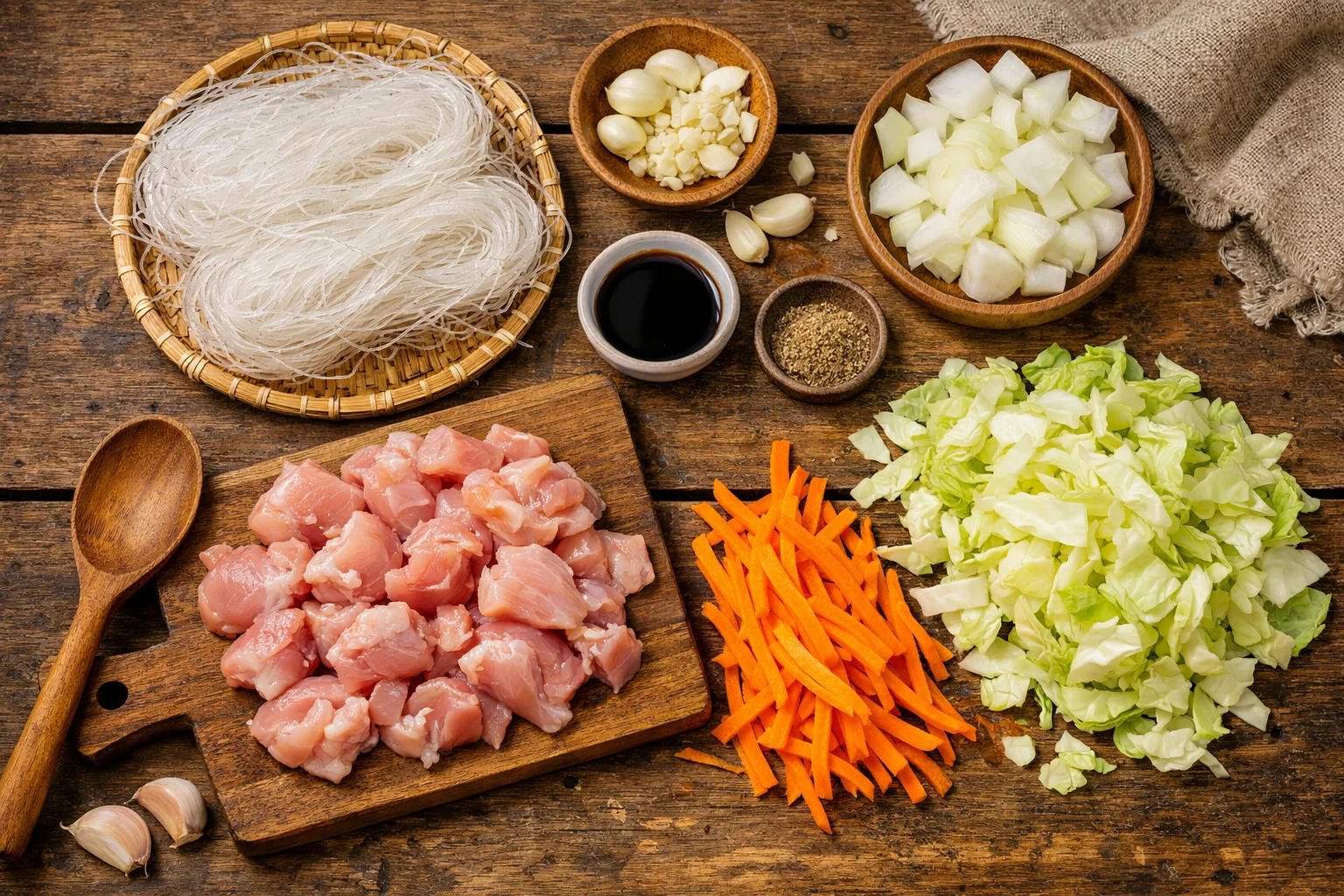
Sotanghon (glass noodles): Look for vermicelli made from mung bean starch. If the package is long, I sometimes snip it in half with kitchen scissors before soaking so it is easier to toss and eat.
Chicken: Boneless thighs are my favorite because they stay tender. Breast works too, just do not overcook it. Slice thin and keep pieces similar in size.
Garlic and onion: Do not skimp. This is your flavor base.
Carrots and cabbage: Classic, budget friendly, and they give crunch. If you have bell pepper, snow peas, or celery, those are great too.
Soy sauce: This gives the savory backbone. If you are salt sensitive, use low sodium and taste as you go.
Oyster sauce: Optional but highly recommended for that deeper, slightly sweet savory taste. If you do not have it, add a tiny pinch of sugar plus a little extra soy sauce.
Chicken broth or water: Broth gives more flavor. Water still works when you are in a pinch.
Black pepper and a squeeze of calamansi or lemon: Pepper adds warmth. Citrus at the end wakes everything up.
Here is a quick sauce ratio I use when I am not measuring too carefully: soy sauce plus a spoon of oyster sauce, then enough broth to help the noodles cook. Start light, then add more to taste. Sotanghon keeps absorbing liquid, so you can always adjust.
Also, if you love Filipino comfort food flavors, keep this for later: easy Filipino ginger chicken soup. It is a nice reset meal when you want something soothing after noodle nights.
Serving Suggestions and Storage Tips
This is the part where I get a little excited because this dish is flexible. easy chicken sotanghon stir fry can be a full meal on its own, or you can serve it with a few extras and make it feel like a small feast.
How I serve it at home
- With calamansi or lemon wedges on the side so everyone can brighten their bowl.
- With a fried egg on top if I want it extra filling.
- With sliced green onions or toasted garlic for a little crunch.
- With a simple side dish like cucumber salad or steamed veggies when I want balance.
If you are feeding picky eaters, keep the veggies sliced thin and not too many types at once. Carrots and cabbage are usually safe. If you are feeding hungry people, stretch the dish by adding more cabbage and a bit more broth, since the noodles will keep soaking up flavor.
“I tried this chicken sotanghon stir fry for a potluck and the pan came back empty. People kept asking if I bought it from a restaurant. The noodles were not soggy at all, and the flavor was so comforting.”
Storage is simple, but sotanghon has a personality. It will keep absorbing sauce in the fridge, so it may look a little dry the next day. That is normal.
To store: Cool completely, then pack in an airtight container. It keeps well for about 3 days.
To reheat: Warm in a pan with a splash of water or broth. Toss gently until it loosens up. Microwave works too, just add a spoon of water and cover loosely so it steams.
If you want something you can prep and keep around for quick meals, you might also like baked chicken adobo flakes. I love sprinkling it over rice, noodles, even salads when I need a fast protein boost.
Variations of Sotanghon Recipes
Once you get the base version down, you can play. That is part of why I keep coming back to this recipe. I can make it light or hearty depending on my mood, and it still feels like easy chicken sotanghon stir fry at its core.
Here are a few variations I have actually done in my own kitchen:
Spicy version: Add chili garlic sauce or chopped fresh chilies with the garlic and onion. A tiny bit goes a long way.
More veggie version: Double the cabbage, add mushrooms, or throw in a handful of spinach at the very end.
Shrimp and chicken combo: Add shrimp near the end so it stays plump. It makes the dish feel a little fancy without much extra work.
“Pancit vibes” version: Add a little more soy sauce, a pinch of sugar, and top with extra calamansi. It hits that familiar party noodle feeling.
Low meat version: Use less chicken and bulk up with tofu or extra vegetables. The sauce still carries the dish.
One caution with variations: do not overload the pan with wet ingredients all at once. Too much liquid can make the noodles cook unevenly. If you want to add lots of veggies, sauté them first until they soften a bit, then proceed.
Frequently Asked Questions About Sotanghon
Q: Do I have to soak sotanghon noodles first?
Yes, I strongly recommend it. Soaking makes the noodles flexible so they finish cooking evenly in the sauce. It is the easiest way to avoid hard centers and gummy outsides.
Q: Why did my sotanghon turn mushy?
Usually it is because it sat in liquid too long or was cooked at too high heat with too much broth. Keep the noodles for the final stage, then turn off the heat once they are tender but still springy.
Q: Can I use leftover chicken?
Absolutely. Shred or slice it, then add it after the veggies so it just warms through. Leftover roasted chicken is especially good because it already has flavor.
Q: Can I make it ahead for a party?
You can, but sotanghon is best fresh. If you must make it ahead, keep a little extra broth on the side. Reheat in a pan and loosen the noodles with a splash of broth right before serving.
Q: What is the best pan to use?
A wide skillet or wok is ideal. You want space to toss the noodles without crushing them into a tight pile.
A Cozy Noodle Dinner You Will Want on Repeat
If you make this once, you will see why it becomes a regular thing. The flavors are simple, the steps are easy, and it is one of those meals that feels like a warm hug after a long day. When you want to explore another take on these noodles, I enjoyed reading Sotanghon Guisado: Stir Fried Glass Noodles | Lemons + Anchovies for extra inspiration and little technique reminders. Try my easy chicken sotanghon stir fry, tweak it to your taste, and do not be surprised if someone asks for seconds. You have got this.
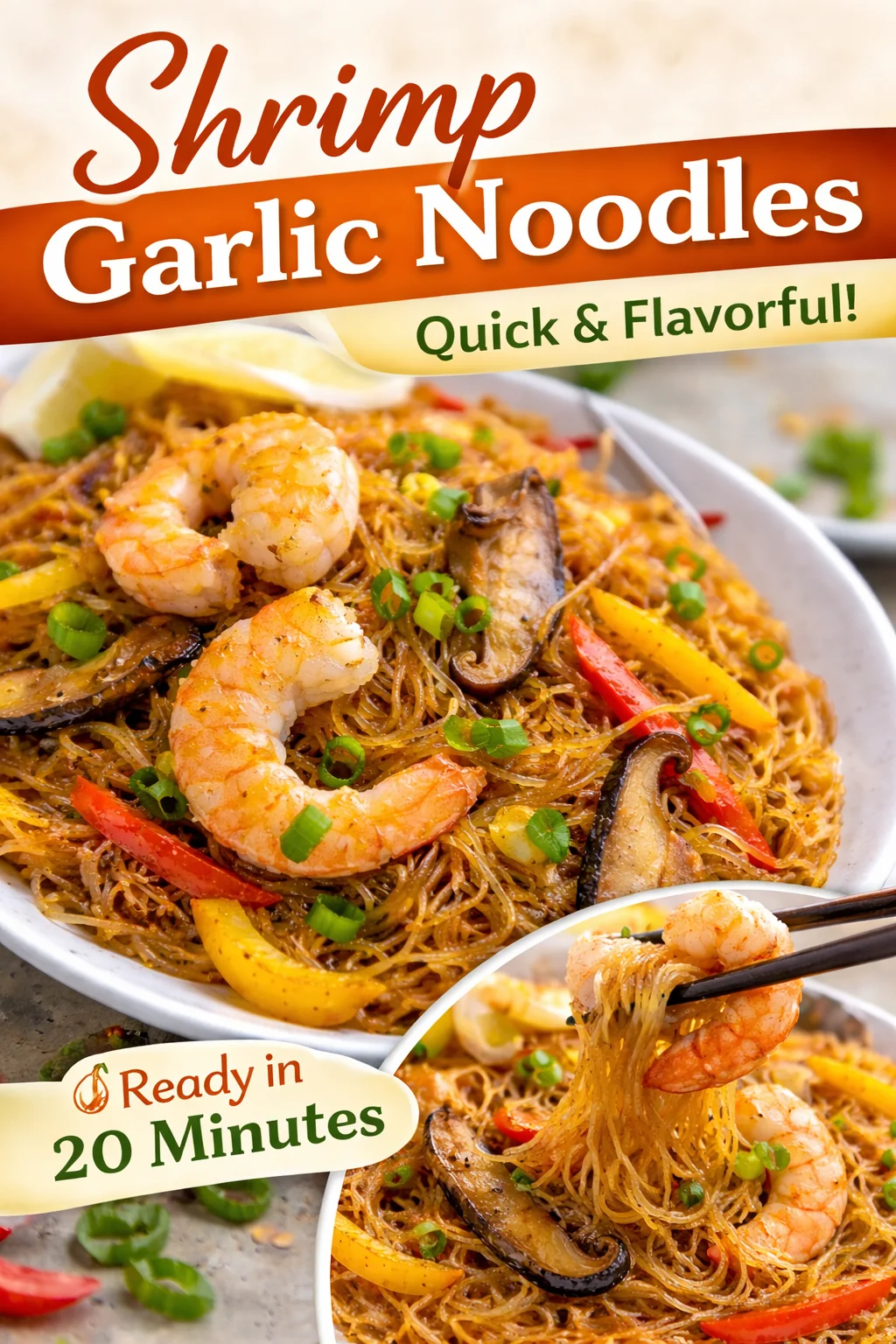
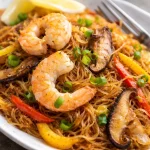
Easy Chicken Sotanghon Stir Fry
Ingredients
For the Noodles
- 200 grams Sotanghon (glass noodles) Look for vermicelli made from mung bean starch.
For the Chicken
- 500 grams Chicken thighs, boneless Slice thin for even cooking.
Flavor Base
- 4 cloves Garlic Finely chopped.
- 1 medium Onion Chopped.
Vegetables
- 1 cup Carrots Julienned.
- 1 cup Cabbage Shredded.
Sauce Ingredients
- 3 tablespoons Soy sauce Use low sodium if necessary.
- 2 tablespoons Oyster sauce Optional but recommended.
- 1 cup Chicken broth or water Broth adds more flavor.
- to taste Black pepper Adds warmth.
- 1 squeeze Calamansi or lemon For brightness.
Instructions
Preparation
- Soak the sotanghon noodles in room temperature water for 8 to 12 minutes, until flexible, then drain.
- Prep chicken by slicing it thinly and ensuring all pieces are similar in size.
- Chop garlic and onion, julienne the carrots, and shred the cabbage.
Cooking
- Heat a wide pan and add oil to cook the chicken until golden brown, then set aside.
- In the same pan, add garlic and onion, sauté until fragrant.
- Add carrots and cabbage, and cook until they begin to soften.
- Add the chicken back to the pan, then add the soaked sotanghon noodles.
- Pour in the soy sauce, oyster sauce, and chicken broth, tossing to coat the noodles.
- Cook until the noodles finish absorbing the sauce, adding more broth if needed.
- Finish with black pepper and a squeeze of calamansi or lemon, adjust to taste.